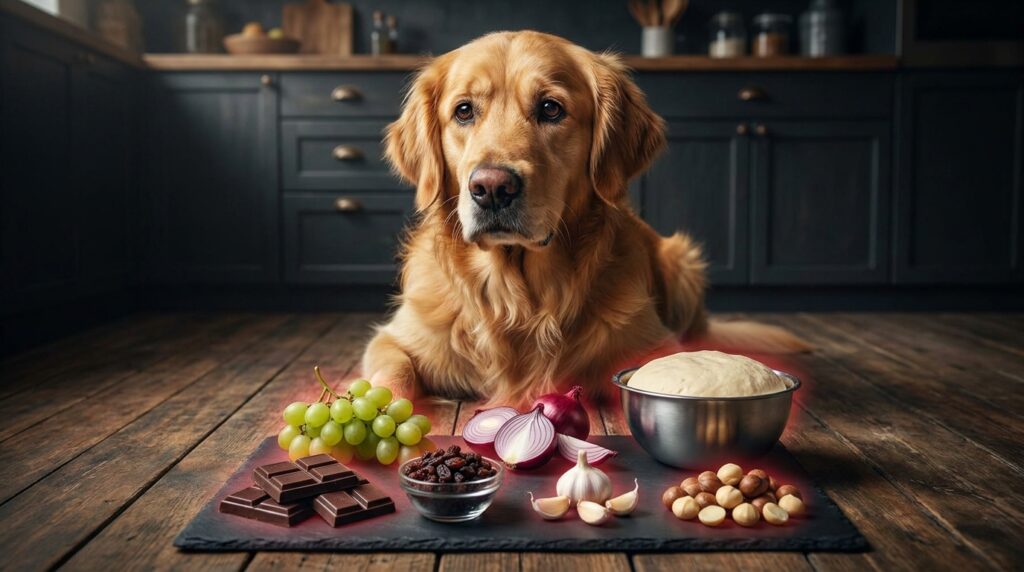
Your dog may look at you with those irresistible eyes while you’re eating.
One little bite probably doesn’t seem like a big deal.
But some foods that are perfectly normal for humans can be dangerous—or even toxic—for dogs.
Dogs have different nutritional needs and process certain substances differently from people. That’s why something sitting harmlessly on your kitchen table could become a serious problem if your dog gets into it.
Here are some of the foods every dog owner should know about.
1. Chocolate
Chocolate is one of the most well-known foods dogs should avoid.
It contains substances called theobromine and caffeine, which dogs process differently from humans. Depending on the type and amount of chocolate consumed, these substances can cause serious problems.
Dark chocolate and baking chocolate are especially concerning because they generally contain higher concentrations of these compounds.
Signs of chocolate poisoning can include vomiting, restlessness, rapid heart rate, tremors, and seizures.
So if your dog manages to grab a piece of chocolate from the table, don’t simply assume they will be fine.
The safest approach is to contact a veterinarian or animal poison service promptly for advice.
2. Grapes and Raisins
This one surprises many dog owners.
Grapes and raisins may look like harmless little snacks, but they can cause acute kidney injury in some dogs.
The difficult part is that there isn’t a reliable way to predict which dog will become seriously ill or how much will cause a problem.
That means even a small amount shouldn’t be treated casually.
If your dog eats grapes or raisins, contact your veterinarian as soon as possible rather than waiting for symptoms to appear.
3. Onions and Garlic
Onions, garlic, and related foods belong to the allium family.
They can damage red blood cells in dogs and potentially lead to anemia, particularly when enough is consumed.
What’s tricky is that these ingredients can hide in foods you might not immediately think about.
Sauces, seasonings, soups, leftovers, and prepared foods may contain onion or garlic.
So before sharing your dinner with your dog, check the ingredients carefully.
And these are only the first three.
There are still four common foods that many dog owners keep at home without realizing they could pose a risk.
One of them is often found in kitchens, snack bowls, and even holiday desserts…
And the next one may surprise you.
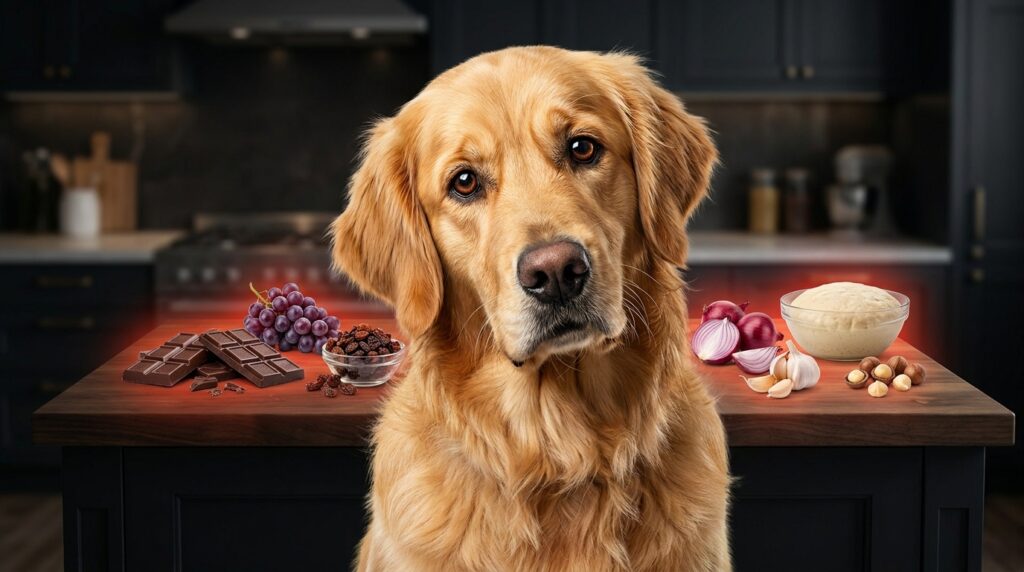
So far, we’ve covered chocolate, grapes, raisins, onions, and garlic. But there are still four foods that deserve your attention.
Some may already be sitting in your kitchen right now.
4. Xylitol
Xylitol is a sugar substitute found in some sugar-free products, including certain gums, candies, baked goods, and dental products.
For dogs, xylitol can be extremely dangerous.
It can cause a rapid drop in blood sugar and, in serious cases, liver problems.
The tricky part is that you may not immediately realize a product contains it.
Always check the ingredient label before allowing your dog near sugar-free foods or products.
If you suspect your dog has consumed xylitol, treat it as an emergency and contact a veterinarian immediately.
5. Alcohol
Dogs should never be given alcoholic drinks.
Alcohol can affect a dog’s nervous system and may cause symptoms such as vomiting, weakness, difficulty walking, breathing problems, or worse.
Even though you may think a tiny amount couldn’t matter, there is no good reason to intentionally give alcohol to a dog.
Keep alcoholic beverages safely out of reach, especially during parties and family gatherings.
6. Macadamia Nuts
Macadamia nuts are another food that should stay away from your dog’s bowl.
They can cause illness in dogs, with symptoms potentially including weakness, vomiting, tremors, and difficulty walking.
The exact reason these nuts are toxic to dogs isn’t completely understood, but the important thing is simple: don’t intentionally feed them to your dog.
Be particularly careful with cookies, cakes, and other desserts that may contain macadamia nuts.
7. Raw Yeast Dough
Here’s one many people don’t think about.
Raw yeast dough can be dangerous because it can continue to expand inside a dog’s stomach.
As the dough ferments, it can also produce alcohol, creating additional risks.
That means an unattended bowl of rising bread dough could become a serious temptation for a curious dog.
Keep raw dough safely away from your pet while you’re cooking or baking.
The Safest Rule for Your Dog
When it comes to human food, the safest approach isn’t to assume that something is harmless simply because people can eat it.
Dogs are different from us.
If your dog accidentally eats something potentially toxic, don’t wait for symptoms to appear. Contact your veterinarian or an appropriate animal poison service and tell them what your dog ate, approximately how much, and when it happened.
And remember: prevention is much easier than dealing with an emergency.
Your dog may beg for whatever is on your plate, but sometimes the kindest thing you can do is simply say no.
Because when it comes to these seven foods, that one little “no” could protect your best friend.